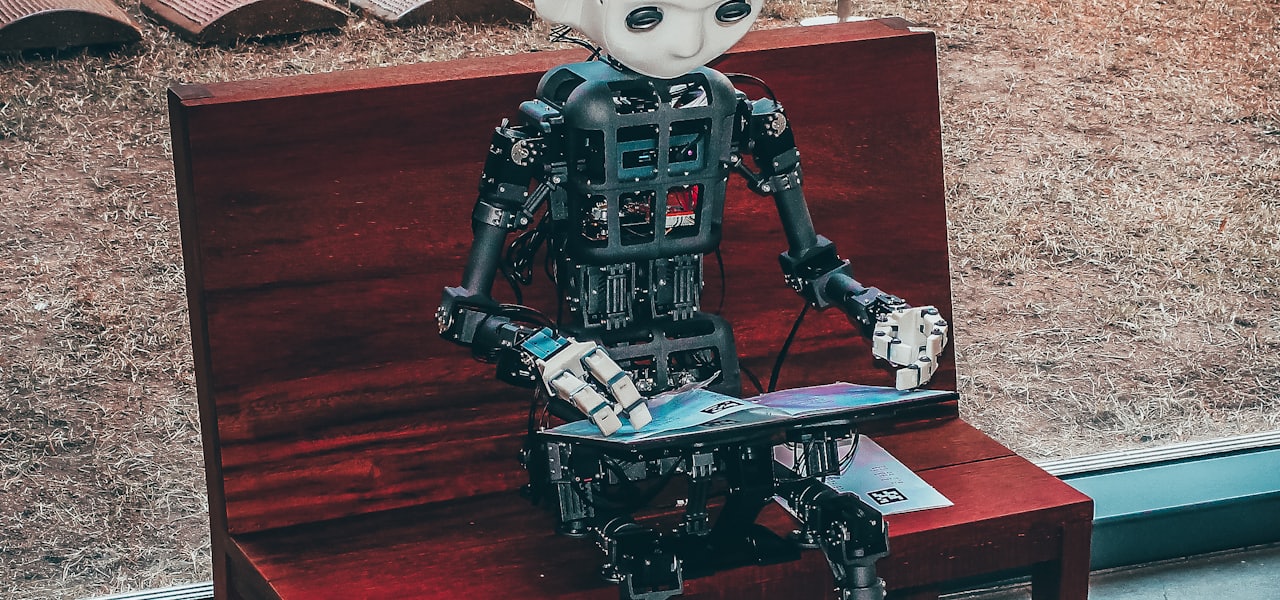
Human-based evolutionary computation (HBEC) is a set of evolutionary computation techniques that rely on human innovation. == Classes and examples == Human-based evolutionary computation techniques can be classified into three more specific classes analogous to ones in evolutionary computation. There are three basic types of innovation: initialization, mutation, and recombination. Here is a table illustrating which type of human innovation are supported in different classes of HBEC: All these three classes also have to implement selection, performed either by humans or by computers. === Human-based selection strategy === Human-based selection strategy is a simplest human-based evolutionary computation procedure. It is used heavily today by websites outsourcing collection and selection of the content to humans (user-contributed content). Viewed as evolutionary computation, their mechanism supports two operations: initialization (when a user adds a new item) and selection (when a user expresses preference among items). The website software aggregates the preferences to compute the fitness of items so that it can promote the fittest items and discard the worst ones. Several methods of human-based selection were analytically compared in studies by Kosorukoff and Gentry. Because the concept seems too simple, most of the websites implementing the idea can't avoid the common pitfall: informational cascade in soliciting human preference. For example, digg-style implementations, pervasive on the web, heavily bias subsequent human evaluations by prior ones by showing how many votes the items already have. This makes the aggregated evaluation depend on a very small initial sample of rarely independent evaluations. This encourages many people to game the system that might add to digg's popularity but detract from the quality of the featured results. It is too easy to submit evaluation in digg-style system based only on the content title, without reading the actual content supposed to be evaluated. A better example of a human-based selection system is Stumbleupon. In Stumbleupon, users first experience the content (stumble upon it), and can then submit their preference by pressing a thumb-up or thumb-down button. Because the user doesn't see the number of votes given to the site by previous users, Stumbleupon can collect a relatively unbiased set of user preferences, and thus evaluate content much more precisely. === Human-based evolution strategy === In this context and maybe generally, the Wikipedia software is the best illustration of a working human-based evolution strategy wherein the (targeted) evolution of any given page comprises the fine tuning of the knowledge base of such information that relates to that page. Traditional evolution strategy has three operators: initialization, mutation, and selection. In the case of Wikipedia, the initialization operator is page creation, the mutation operator is incremental page editing. The selection operator is less salient. It is provided by the revision history and the ability to select among all previous revisions via a revert operation. If the page is vandalised and no longer a good fit to its title, a reader can easily go to the revision history and select one of the previous revisions that fits best (hopefully, the previous one). This selection feature is crucial to the success of the Wikipedia. An interesting fact is that the original wiki software was created in 1995, but it took at least another six years for large wiki-based collaborative projects to appear. Why did it take so long? One explanation is that the original wiki software lacked a selection operation and hence couldn't effectively support content evolution. The addition of revision history and the rise of large wiki-supported communities coincide in time. From an evolutionary computation point of view, this is not surprising: without a selection operation the content would undergo an aimless genetic drift and would unlikely to be useful to anyone. That is what many people expected from Wikipedia at its inception. However, with a selection operation, the utility of content has a tendency to improve over time as beneficial changes accumulate. This is what actually happens on a large scale in Wikipedia. === Human-based genetic algorithm === Human-based genetic algorithm (HBGA) provides means for human-based recombination operation (a distinctive feature of genetic algorithms). Recombination operator brings together highly fit parts of different solutions that evolved independently. This makes the evolutionary process more efficient.
Moral outsourcing
Moral outsourcing is the placing of responsibility for ethical decision-making onto external entities, often algorithms. The term is often used in discussions of computer science and algorithmic fairness, but it can apply to any situation in which one appeals to outside agents in order to absolve themselves of responsibility for their actions. In this context, moral outsourcing specifically refers to the tendency of society to blame technology, rather than its creators or users, for any harm it may cause. == Definition == The term "moral outsourcing" was first coined by Dr. Rumman Chowdhury, a data scientist concerned with the overlap between artificial intelligence and social issues. Chowdhury used the term to describe looming fears of a so-called “Fourth Industrial Revolution” following the rise of artificial intelligence. Moral outsourcing is often applied by technologists to shrink away from their part in building offensive products. In her TED Talk, Chowdhury gives the example of a creator excusing their work by saying they were simply doing their job. This is a case of moral outsourcing and not taking ownership for the consequences of creation. When it comes to AI, moral outsourcing allows for creators to decide when the machine is human and when it is a computer - shifting the blame and responsibility of moral plights off of the technologists and onto the technology. Conversations around AI and bias and its impacts require accountability to bring change. It is difficult to address these biased systems if their creators use moral outsourcing to avoid taking any responsibility for the issue. One example of moral outsourcing is the anger that is directed at machines for “taking jobs away from humans” rather than companies for employing that technology and jeopardizing jobs in the first place. The term "moral outsourcing" refers to the concept of outsourcing, or enlisting an external operation to complete specific work for another organization. In the case of moral outsourcing, the work of resolving moral dilemmas or making choices according to an ethical code is supposed to be conducted by another entity. == Real-world applications == In the medical field, AI is increasingly involved in decision-making processes about which patients to treat, and how to treat them. The responsibility of the doctor to make informed decisions about what is best for their patients is outsourced to an algorithm. Sympathy is also noted to be an important part of medical practice; an aspect that artificial intelligence, glaringly, is missing. This form of moral outsourcing is a major concern in the medical community. Another field of technology in which moral outsourcing is frequently brought up is autonomous vehicles. California Polytechnic State University professor Keith Abney proposed an example scenario: "Suppose we have some [troublemaking] teenagers, and they see an autonomous vehicle, they drive right at it. They know the autonomous vehicle will swerve off the road and go off a cliff, but should it?" The decision of whether to sacrifice the autonomous vehicle (and any passengers inside) or the vehicle coming at it will be written into the algorithms defining the car's behavior. In the case of moral outsourcing, the responsibility of any damage caused by an accident may be attributed to the autonomous vehicle itself, rather than the creators who wrote the protocol the vehicle will use to "decide" what to do. Moral outsourcing is also used to delegate the consequences of predictive policing algorithms to technology, rather than the creators or the police. There are many ethical concerns with predictive policing due to the fact that it results in the over-policing of low income and minority communities. In the context of moral outsourcing, the positive feedback loop of sending disproportionate police forces into minority communities is attributed to the algorithm and the data being fed into this system--rather than the users and creators of the predictive policing technology. == Outside of technology == === Religion === Moral outsourcing is also commonly seen in appeals to religion to justify discrimination or harm. In his book What It Means to be Moral, sociologist Phil Zuckerman contradicts the popular religious notion that morality comes from God. Religion is oftentimes cited as a foundation for a moral stance without any tangible relation between the religious beliefs and personal stance. In these cases, religious individuals will "outsource" their personal beliefs and opinions by claiming that they are a result of their religious identification. This is seen where religion is cited as a factor for political beliefs, medical beliefs, and in extreme cases an excuse for violence. === Manufacturing === Moral outsourcing can also be seen in the business world in terms of manufacturing goods and avoiding environmental responsibility. Some companies in the United States will move their production process to foreign countries with more relaxed environmental policies to avoid the pollution laws that exist in the US. A study by the Harvard Business Review found that "in countries with tight environmental regulation, companies have 29% lower domestic emissions on average. On the other hand, such a tightening in regulation results in 43% higher emissions abroad." The consequences of higher pollution rates are then attributed to the loose regulations in these countries, rather than on the companies themselves who purposefully moved into these areas to avoid strict pollution policy.
Amazon Rekognition
Amazon Rekognition is a cloud-based software as a service (SaaS) computer vision platform that was launched in 2016. It has been sold to, and used by, a number of United States government agencies, including U.S. Immigration and Customs Enforcement (ICE) and Orlando, Florida police, as well as private entities. == Capabilities == Rekognition provides a number of computer vision capabilities, which can be divided into two categories: Algorithms that are pre-trained on data collected by Amazon or its partners, and algorithms that a user can train on a custom dataset. As of July 2019, Rekognition provides the following computer vision capabilities. === Pre-trained algorithms === Celebrity recognition in images Facial attribute detection in images, including gender, age range, emotions (e.g. happy, calm, disgusted), whether the face has a beard or mustache, whether the face has eyeglasses or sunglasses, whether the eyes are open, whether the mouth is open, whether the person is smiling, and the location of several markers such as the pupils and jaw line. People Pathing enables tracking of people through a video. An advertised use-case of this capability is to track sports players for post-game analysis. Text detection and classification in images Unsafe visual content detection === Algorithms that a user can train on a custom dataset === SearchFaces enables users to import a database of images with pre-labeled faces, to train a machine learning model on this database, and to expose the model as a cloud service with an API. Then, the user can post new images to the API and receive information about the faces in the image. The API can be used to expose a number of capabilities, including identifying faces of known people, comparing faces, and finding similar faces in a database. Face-based user verification == History and use == === 2017 === In late 2017, the Washington County, Oregon Sheriff's Office began using Rekognition to identify suspects' faces. Rekognition was marketed as a general-purpose computer vision tool, and an engineer working for Washington County decided to use the tool for facial analysis of suspects. Rekognition was offered to the department for free, and Washington County became the first US law enforcement agency known to use Rekognition. In 2018, the agency logged over 1,000 facial searches. The county, according to the Washington Post, by 2019 was paying about $7 a month for all of its searches. The relationship was unknown to the public until May 2018. In 2018, Rekognition was also used to help identify celebrities during a royal wedding telecast. === 2018 === In April 2018, it was reported that FamilySearch was using Rekognition to enable their users to "see which of their ancestors they most resemble based on family photographs". In early 2018, the FBI also began using it as a pilot program for analyzing video surveillance. In May 2018, it was reported by the ACLU that Orlando, Florida was running a pilot using Rekognition for facial analysis in law enforcement, with that pilot ending in July 2019. After the report, on June 22, 2018, Gizmodo reported that Amazon workers had written a letter to CEO Jeff Bezos requesting he cease selling Rekognition to US law enforcement, particularly ICE and Homeland Security. A letter was also sent to Bezos by the ACLU. On June 26, 2018, it was reported that the Orlando police force had ceased using Rekognition after their trial contract expired, reserving the right to use it in the future. The Orlando Police Department said that they had "never gotten to the point to test images" due to old infrastructure and low bandwidth. In July 2018, the ACLU released a test showing that Rekognition had falsely matched 28 members of Congress with mugshot photos, particularly Congresspeople of color. 25 House members afterwards sent a letter to Bezos, expressing concern about Rekognition. Amazon responded saying the Rekognition test had generated 80 percent confidence, while it recommended law enforcement only use matches rated at 99 percent confidence. The Washington Post states that Oregon instead has officers pick a "best of five" result, instead of adhering to the recommendation. In September 2018, it was reported that Mapillary was using Rekognition to read the text on parking signs (e.g. no stopping, no parking, or specific parking hours) in cities. In October 2018, it was reported that Amazon had earlier that year pitched Rekognition to U.S. Immigration and Customs Enforcement agency. Amazon defended government use of Rekognition. On December 1, 2018, it was reported that 8 Democratic lawmakers had said in a letter that Amazon had "failed to provide sufficient answers" about Rekognition, writing that they had "serious concerns that this type of product has significant accuracy issues, places disproportionate burdens on communities of color, and could stifle Americans' willingness to exercise their First Amendment rights in public." === 2019 === In January 2019, MIT researchers published a peer-reviewed study asserting that Rekognition had more difficulty in identifying dark-skinned females than competitors such as IBM and Microsoft. In the study, Rekognition misidentified darker-skinned women as men 31% of the time, but made no mistakes for light-skinned men. Amazon called the report "misinterpreted results" of the research with an improper "default confidence threshold." In January 2019, Amazon's shareholders "urged Amazon to stop selling Rekognition software to law enforcement agencies." Amazon in response defended its use of Rekognition, but supported new federal oversight and guidelines to "make sure facial recognition technology cannot be used to discriminate." In February 2019, it was reported that Amazon was collaborating with the National Institute of Standards and Technology (NIST) on developing standardized tests to improve accuracy and remove bias with facial recognition. In March 2019, an open letter regarding Rekognition was sent by a group of prominent AI researchers to Amazon, criticizing its sale to law enforcement with around 50 signatures. In April 2019, Amazon was told by the Securities and Exchange Commission that they had to vote on two shareholder proposals seeking to limit Rekognition. Amazon argued that the proposals were an "insignificant public policy issue for the Company" not related to Amazon's ordinary business, but their appeal was denied. The vote was set for May. The first proposal was tabled by shareholders. On May 24, 2019, 2.4% of shareholders voted to stop selling Rekognition to government agencies, while a second proposal calling for a study into Rekognition and civil rights had 27.5% support. In August 2019, the ACLU again used Rekognition on members of government, with 26 of 120 lawmakers in California flagged as matches to mugshots. Amazon stated the ACLU was "misusing" the software in the tests, by not dismissing results that did not meet Amazon's recommended accuracy threshold of 99%. By August 2019, there had been protests against ICE's use of Rekognition to surveil immigrants. In March 2019, Amazon announced a Rekognition update that would improve emotional detection, and in August 2019, "fear" was added to emotions that Rekognition could detect. === 2020 === In June 2020, Amazon announced it was implementing a one-year moratorium on police use of Rekognition, in response to the George Floyd protests. === 2024 === The Department of Justice disclosed that the FBI is initiating the use of Amazon Rekognition. The DOJ's AI inventory revealed the FBI's "Project Tyr" aims to customize Rekognition to identify nudity, weapons, explosives, and other information from lawfully acquired media. === 2025 === In late 2025, the New York Times reported that scientist, Dr. Jürgen Matthäus, retired from as the head of research at the U.S. Holocaust Memorial Museum in Washington, D.C., used Amazon Rekognition to identify the shooter in the Holocaust photograph known as The Last Jew in Vinnitsa "with more than 99 percent certainty" — as Jakobus Onnen (1906–1943), a teacher from Tichelwarf near Weener in East Frisia who had been a member of the SS since 1934 and was later killed in action near Zhitomir in 1943. The photographer and victim remain unidentified. == Controversy regarding facial analysis == === Racial and gender bias === In 2018, MIT researchers Joy Buolamwini and Timnit Gebru published a study called Gender Shades. In this study, a set of images was collected, and faces in the images were labeled with face position, gender, and skin tone information. The images were run through SaaS facial recognition platforms from Face++, IBM, and Microsoft. In all three of these platforms, the classifiers performed best on male faces (with error rates on female faces being 8.1% to 20.6% higher than error rates on male faces), and they performed worst on dark female faces (with error rates ranging from 20.8% to 30.4%). The authors hypothesized that this discr
Kernel principal component analysis
In the field of multivariate statistics, kernel principal component analysis (kernel PCA) is an extension of principal component analysis (PCA) using techniques of kernel methods. Using a kernel, the originally linear operations of PCA are performed in a reproducing kernel Hilbert space. == Background: Linear PCA == Recall that conventional PCA operates on zero-centered data; that is, 1 N ∑ i = 1 N x i = 0 {\displaystyle {\frac {1}{N}}\sum _{i=1}^{N}\mathbf {x} _{i}=\mathbf {0} } , where x i {\displaystyle \mathbf {x} _{i}} is one of the N {\displaystyle N} multivariate observations. It operates by diagonalizing the covariance matrix, C = 1 N ∑ i = 1 N x i x i ⊤ {\displaystyle C={\frac {1}{N}}\sum _{i=1}^{N}\mathbf {x} _{i}\mathbf {x} _{i}^{\top }} in other words, it gives an eigendecomposition of the covariance matrix: λ v = C v {\displaystyle \lambda \mathbf {v} =C\mathbf {v} } which can be rewritten as λ x i ⊤ v = x i ⊤ C v for i = 1 , … , N {\displaystyle \lambda \mathbf {x} _{i}^{\top }\mathbf {v} =\mathbf {x} _{i}^{\top }C\mathbf {v} \quad {\textrm {for}}~i=1,\ldots ,N} . (See also: Covariance matrix as a linear operator) == Introduction of the Kernel to PCA == To understand the utility of kernel PCA, particularly for clustering, observe that, while N points cannot, in general, be linearly separated in d < N {\displaystyle d A Bayesian network (also known as a Bayes network, Bayes net, belief network, or decision network) is a probabilistic graphical model that represents a set of variables and their conditional dependencies via a directed acyclic graph (DAG). While it is one of several forms of causal notation, causal networks are special cases of Bayesian networks. Bayesian networks are ideal for taking an event that occurred and predicting the likelihood that any one of several possible known causes was the contributing factor. For example, a Bayesian network could represent the probabilistic relationships between diseases and symptoms. Given symptoms, the network can be used to compute the probabilities of the presence of various diseases. Efficient algorithms can perform inference and learning in Bayesian networks. Bayesian networks that model sequences of variables (e.g. speech signals or protein sequences) are called dynamic Bayesian networks. Generalizations of Bayesian networks that can represent and solve decision problems under uncertainty are called influence diagrams. == Graphical model == Formally, Bayesian networks are directed acyclic graphs (DAGs) whose nodes represent variables in the Bayesian sense: they may be observable quantities, latent variables, unknown parameters or hypotheses. Each edge represents a direct conditional dependency. Any pair of nodes that are not connected (i.e. no path connects one node to the other) represent variables that are conditionally independent of each other. Each node is associated with a probability function that takes, as input, a particular set of values for the node's parent variables, and gives (as output) the probability (or probability distribution, if applicable) of the variable represented by the node. For example, if m {\displaystyle m} parent nodes represent m {\displaystyle m} Boolean variables, then the probability function could be represented by a table of 2 m {\displaystyle 2^{m}} entries, one entry for each of the 2 m {\displaystyle 2^{m}} possible parent combinations. Similar ideas may be applied to undirected, and possibly cyclic, graphs such as Markov networks. == Example == Suppose we want to model the dependencies between three variables: the sprinkler (or more appropriately, its state - whether it is on or not), the presence or absence of rain and whether the grass is wet or not. Observe that two events can cause the grass to become wet: an active sprinkler or rain. Rain has a direct effect on the use of the sprinkler (namely that when it rains, the sprinkler usually is not active). This situation can be modeled with a Bayesian network (shown to the right). Each variable has two possible values, T (for true) and F (for false). The joint probability function is, by the chain rule of probability, Pr ( G , S , R ) = Pr ( G ∣ S , R ) Pr ( S ∣ R ) Pr ( R ) {\displaystyle \Pr(G,S,R)=\Pr(G\mid S,R)\Pr(S\mid R)\Pr(R)} where G = "Grass wet (true/false)", S = "Sprinkler turned on (true/false)", and R = "Raining (true/false)". The model can answer questions about the presence of a cause given the presence of an effect (so-called inverse probability) like "What is the probability that it is raining, given the grass is wet?" by using the conditional probability formula and summing over all nuisance variables: Pr ( R = T ∣ G = T ) = Pr ( G = T , R = T ) Pr ( G = T ) = ∑ x ∈ { T , F } Pr ( G = T , S = x , R = T ) ∑ x , y ∈ { T , F } Pr ( G = T , S = x , R = y ) {\displaystyle \Pr(R=T\mid G=T)={\frac {\Pr(G=T,R=T)}{\Pr(G=T)}}={\frac {\sum _{x\in \{T,F\}}\Pr(G=T,S=x,R=T)}{\sum _{x,y\in \{T,F\}}\Pr(G=T,S=x,R=y)}}} Using the expansion for the joint probability function Pr ( G , S , R ) {\displaystyle \Pr(G,S,R)} and the conditional probabilities from the conditional probability tables (CPTs) stated in the diagram, one can evaluate each term in the sums in the numerator and denominator. For example, Pr ( G = T , S = T , R = T ) = Pr ( G = T ∣ S = T , R = T ) Pr ( S = T ∣ R = T ) Pr ( R = T ) = 0.99 × 0.01 × 0.2 = 0.00198. {\displaystyle {\begin{aligned}\Pr(G=T,S=T,R=T)&=\Pr(G=T\mid S=T,R=T)\Pr(S=T\mid R=T)\Pr(R=T)\\&=0.99\times 0.01\times 0.2\\&=0.00198.\end{aligned}}} Then the numerical results (subscripted by the associated variable values) are Pr ( R = T ∣ G = T ) = 0.00198 T T T + 0.1584 T F T 0.00198 T T T + 0.288 T T F + 0.1584 T F T + 0.0 T F F = 891 2491 ≈ 35.77 % . {\displaystyle \Pr(R=T\mid G=T)={\frac {0.00198_{TTT}+0.1584_{TFT}}{0.00198_{TTT}+0.288_{TTF}+0.1584_{TFT}+0.0_{TFF}}}={\frac {891}{2491}}\approx 35.77\%.} To answer an interventional question, such as "What is the probability that it would rain, given that we wet the grass?" the answer is governed by the post-intervention joint distribution function Pr ( S , R ∣ do ( G = T ) ) = Pr ( S ∣ R ) Pr ( R ) {\displaystyle \Pr(S,R\mid {\text{do}}(G=T))=\Pr(S\mid R)\Pr(R)} obtained by removing the factor Pr ( G ∣ S , R ) {\displaystyle \Pr(G\mid S,R)} from the pre-intervention distribution. The do operator forces the value of G to be true. The probability of rain is unaffected by the action: Pr ( R ∣ do ( G = T ) ) = Pr ( R ) . {\displaystyle \Pr(R\mid {\text{do}}(G=T))=\Pr(R).} To predict the impact of turning the sprinkler on: Pr ( R , G ∣ do ( S = T ) ) = Pr ( R ) Pr ( G ∣ R , S = T ) {\displaystyle \Pr(R,G\mid {\text{do}}(S=T))=\Pr(R)\Pr(G\mid R,S=T)} with the term Pr ( S = T ∣ R ) {\displaystyle \Pr(S=T\mid R)} removed, showing that the action affects the grass but not the rain. These predictions may not be feasible given unobserved variables, as in most policy evaluation problems. The effect of the action do ( x ) {\displaystyle {\text{do}}(x)} can still be predicted, however, whenever the back-door criterion is satisfied. It states that, if a set Z of nodes can be observed that d-separates (or blocks) all back-door paths from X to Y then Pr ( Y , Z ∣ do ( x ) ) = Pr ( Y , Z , X = x ) Pr ( X = x ∣ Z ) . {\displaystyle \Pr(Y,Z\mid {\text{do}}(x))={\frac {\Pr(Y,Z,X=x)}{\Pr(X=x\mid Z)}}.} A back-door path is one that ends with an arrow into X. Sets that satisfy the back-door criterion are called "sufficient" or "admissible." For example, the set Z = R is admissible for predicting the effect of S = T on G, because R d-separates the (only) back-door path S ← R → G. However, if S is not observed, no other set d-separates this path and the effect of turning the sprinkler on (S = T) on the grass (G) cannot be predicted from passive observations. In that case P(G | do(S = T)) is not "identified". This reflects the fact that, lacking interventional data, the observed dependence between S and G is due to a causal connection or is spurious (apparent dependence arising from a common cause, R). (see Simpson's paradox) To determine whether a causal relation is identified from an arbitrary Bayesian network with unobserved variables, one can use the three rules of "do-calculus" and test whether all do terms can be removed from the expression of that relation, thus confirming that the desired quantity is estimable from frequency data. Using a Bayesian network can save considerable amounts of memory over exhaustive probability tables, if the dependencies in the joint distribution are sparse. For example, a naive way of storing the conditional probabilities of 10 two-valued variables as a table requires storage space for 2 10 = 1024 {\displaystyle 2^{10}=1024} values. If no variable's local distribution depends on more than three parent variables, the Bayesian network representation stores at most 10 ⋅ 2 3 = 80 {\displaystyle 10\cdot 2^{3}=80} values. One advantage of Bayesian networks is that it is intuitively easier for a human to understand (a sparse set of) direct dependencies and local distributions than complete joint distributions. == Inference and learning == Bayesian networks perform three main inference tasks: Inferring unobserved variables Parameter learning for the probability distributions of each node in the network Structure learning of the graphical network === Inferring unobserved variables === Because a Bayesian network is a complete model for its variables and their relationships, it can be used to answer probabilistic queries about them. For example, the network can be used to update knowledge of the state of a subset of variables when other variables (the evidence variables) are observed. This process of computing the posterior distribution of variables given evidence is called probabilistic inference. The posterior gives a universal sufficient statistic for detection applications, when choosing values for the variable subset that minimize some expected loss function, for instance the probability of decision error. A Bayesian network can thus be considered a mechanism for automatically applying Bayes' theorem to complex problems. The most common exact inference methods are: variable elimination, which eliminates (by integration or summation) the non-observed non-query variables one by one by distributing the sum over the prod The World Database of Happiness is a web-based archive of research findings on subjective appreciation of life, based in the Erasmus Happiness Economics Research Organization of the Erasmus University Rotterdam in The Netherlands. The database contains both an overview of scientific publications on happiness and a digest of research findings. Happiness is defined as the degree to which an individual judges the quality of his or her life as a whole favorably. Two 'components' of happiness are distinguished: hedonic level of affect (the degree to which pleasant affect dominates) and contentment (perceived realization of wants). == Aims == The World Database of Happiness is a tool to quickly acquire an overview on the ever-growing stream of research findings on happiness Medio 2023 the database covered some 16,000 scientific publications on happiness, from which were extracted 23,000 distributional findings (on how happy people are) and another 24,000 correlational findings (on factors associated with more and less happiness). The first findings date from 1915. == Technique == The World Database of Happiness is a ‘findings archive’, which consists of electronic ‘finding pages’ on which separate research results are described in a standard format and terminology. These finding pages can be selected on various characteristics, such as population studies, the measure of happiness used and observed co-variates. All finding-pages have a specific internet address to which links can be made in scientific review papers or policy recommendations. This allows a concise presentation of many findings in a table, while providing readers with access to detail. == Scientific use == The Database has been cited in 254 scientific papers, for example to access under what conditions economic growth enhances average happiness or to show that rising mean happiness at first raises happiness inequality, but further rise will diminish these differences, or that healthy eating is associated with more happiness, even after controlling for the effect on health Another finding is that relative simple happiness training techniques raise happiness by some 5% == Popular use == The World Database of Happiness is often used by popular media to make lists of the happiest countries around the globe. An example is the Happy Planet Index, which aims to chart sustainable happiness all over the world by combining data on longevity, happiness and the size of the ecological footprint of citizens. == Strengths and weaknesses == The database has a clear conceptual focus, it includes only research findings on subjective enjoyment of one's life as a whole. Thereby it evades the Babel that has haunted the study of happiness for ages. The other side of that coin is that much interesting research is left out. The findings are reported with technical details about measurement and statistical analysis. This detail is welcomed by scholars, but makes the information difficult to digest for lay-persons. Still another limitation is that the determinants of happiness appear to vary considerably across persons and situations, which make it hard to draw general conclusions about the causes of happiness. What is clear is that poor health, separation, unemployment and lack of social contact are all strongly negatively associated with happiness. Another problem for the World database of happiness is that the studies on happiness increase with such a high rate that it gets increasingly difficult to offer a complete overview of all research findings. A further concern is that the Database of Happiness is exclusively focused on hedonic happiness (feeling good) and not on mature happiness that might exist in the face of suffering Unique negative dimension (UND) is a complexity measure for the model of learning from positive examples. The unique negative dimension of a class C {\displaystyle C} of concepts is the size of the maximum subclass D ⊆ C {\displaystyle D\subseteq C} such that for every concept c ∈ D {\displaystyle c\in D} , we have ∩ ( D ∖ { c } ) ∖ c {\displaystyle \cap (D\setminus \{c\})\setminus c} is nonempty. This concept was originally proposed by M. Gereb-Graus in "Complexity of learning from one-side examples", Technical Report TR-20-89, Harvard University Division of Engineering and Applied Science, 1989.Bayesian network
World Database of Happiness
Unique negative dimension